Local life, national injustice
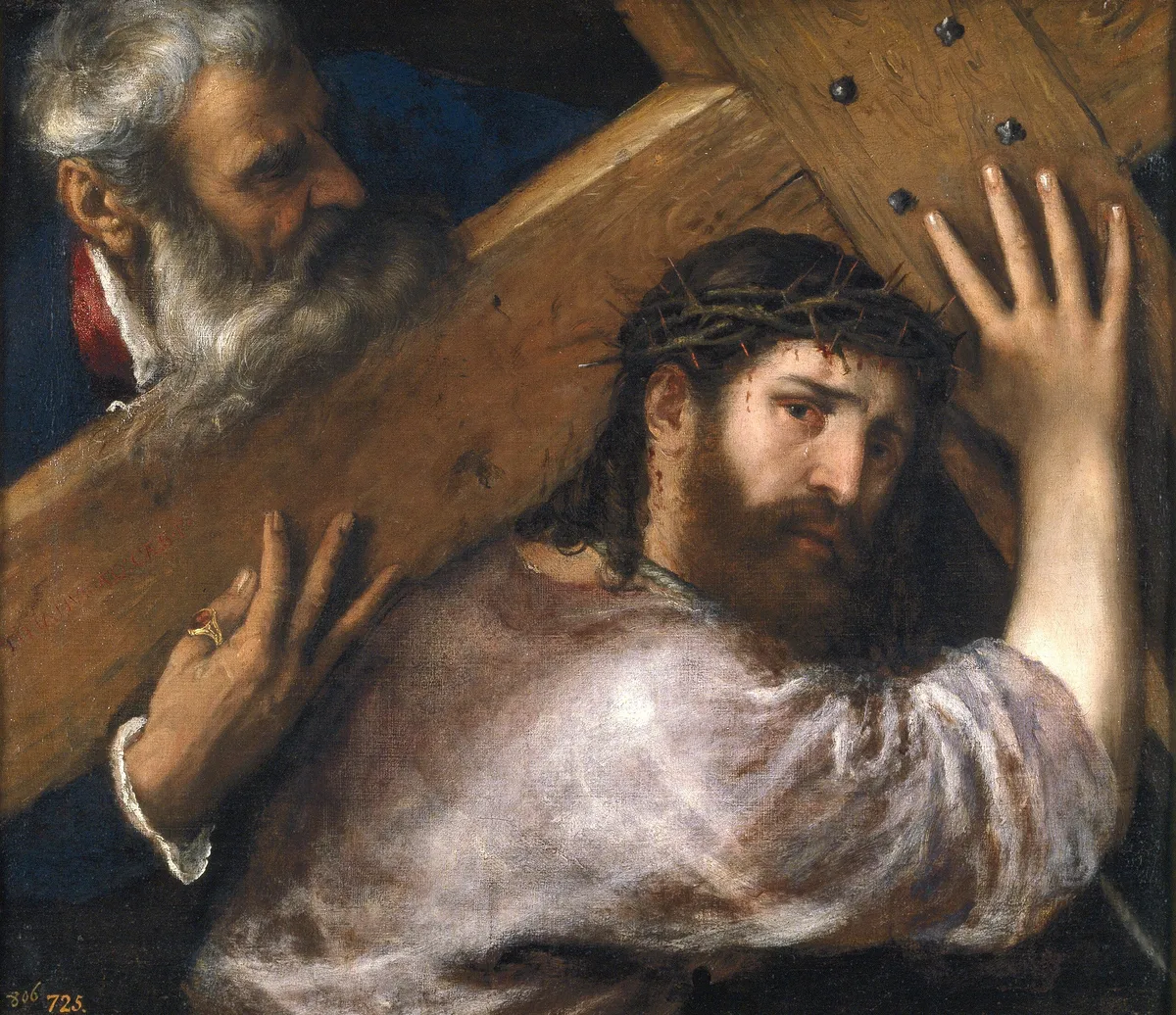 Titian, “Christ Carrying the Cross,” circa 1565.
We haven’t had sun in Michigan for about a week now. My first January in Michigan set a record for the least amount of sunlight: six minutes. But yesterday morning it was sixty degrees, and I was able to walk outside with just a sweater.
—
"I’m amazed at all of you who have insightful things to say about ICE, Venezuela, even Philip Yancey. Today has done me in. I have no words, just a gaping mouth and broken heart."
—Jen Holmes Curran, Jan. 7
—
I spoke with my mom on the phone last week. She lives in the Minneapolis area and works at a church close to downtown, only a few blocks away from Annunciation and a mile or so away from where Renee Nicole Good was murdered. She told me the Minneapolis public school system is taking precautions to protect its children from ICE. They are even giving students the option to stay home and do remote learning because of it.
Her church is beginning to volunteer with local food banks to deliver food to the homes of families too afraid to leave their houses. Kevin Nye is doing similar things, and you can donate to support him on Venmo here.
—
Lex is looking more and more beautiful as each day passes. She has a countdown to our wedding on her phone. I think we are something like forty days away.
We’re planning the wedding ourselves; you should see the spreadsheets and Google docs we have open on our computers. It’s absurd. Lex is a project manager though, so she’s crushing it. I’m just trying to keep up.
We’re going to England for the honeymoon, and we put a “Honeymoon Coffee Fund” on our registry. My dream.
—
Paul Kingsnorth shared a beautiful piece this past week. It was about his journey with burnout—something I know intimately. At one point, he writes,
“I haven’t watched the news, anyway, for months. I have no idea what is ‘going on in the world’ now. Sometimes I glimpse a headline about Keir Starmer or Donald Trump and they seem like dispatches from Mars. I know more these days about the mottled brown cat that keep [sic] turning up on my back porch and stalking my favourite robin. The robin is much too smart for the cat. This is the kind of knowledge I had neglected.”
I went through my journey of burnout in 2022 and 2023, and I don’t remember what was happening geopolitically during that time either. I just remember the cold Stillwater mornings driving to my coffee shop job. I remember the streets, frost still clinging to everything—the concrete, the grass, the trees.
Sometimes I worry—now that I’m “normal” again—that I spend too much time focused on the non-local, the national headlines. Donald Trump and ICE.
—
I’ve been living in Michigan for two years now, and I’m just now beginning to get a group of guy friends. I’m praying we can become a group of guys who “does life” together. I want to tell them about getting married and my nerves and my excitements. I want them to hold me accountable to daily faithfulness. I want to hear their dreams and have game nights and be with them when tragedy strikes.
I want all of that, and I want it to be local, local, local.
—
My mom told me she was sitting next to a couple at lunch who shared how worried they were for their young daughter. She is a perfectly legal US Citizen, but she isn’t white. They’ve trained her to carry her passport around wherever she goes.
—
I was talking with a fellow writer who reminded me that we do not have to speak out about every controversy that comes across our timelines. We can choose to be silent because we either do not know all the facts or because, frankly, it is none of our business.
Some writers do the opposite: they use headlines to stoke audience growth. They are outraged or scandalized or contentious, whatever is needed to get people smashing that “like” button, their justice work disingenuous.
I sometimes wonder who they are writing for. They decry polarization but are adding to it. They pretend to be a modern-day prophet, but all their propheting gains them fame and paying subscribers, hardly the model Elijah in the wilderness or John the Baptist in the desert.
—
I believe it is okay, as a Christian writer, to not write about every issue under the sun. The world is not sitting on the edge of its seat wondering what Drew Brown has to say about ICE or Donald Trump.
But when is silence really just an exercise in privilege? How is my silence forcing other writers—often women and writers of color—to carry the cross of justice work?
What’s that old adage? That silence can be golden? But can’t silence also be dangerous—an excuse to maintain an unjust status quo?
—
And then there are these verses from 1 Thessalonians (4:10-12, NRSVUE):
“But we urge you, brothers and sisters, to do so more and more, to aspire to live quietly, to mind your own affairs, and to work with your hands, as we directed you, so that you may behave properly toward outsiders and be dependent on no one.”
People have been sharing this verse often on my timeline recently. It flies in the face of the “creator economy.” It reminds us to keep our eyes on our own affairs, to be local, to not seek public admiration and praise. It reminds me of something Wendell Berry wrote in that famous essay “Think Little”:
“A couple who make a good marriage, and raise healthy, morally competent children, are serving the world’s future more directly and surely than any political leader, though they never utter a public word.”
Power and public speech are not the only ways to serve God, change the world, and work against injustice. I believe this.
—
But what if we are quoting that verse wrong? What if we are using that verse as a decoy for our privilege, saying “It’s okay that I live in a suburb and never face injustice because I’m living a quiet life”? What if “a quiet life” is a poor excuse for a privileged existence?
—
This morning I read Matthew 25. It has the parable of the talents and the separating of the goats and sheep.
First, the talents. The master gives his servants talents and expects them to do something with them, to make them increase.
Is it too on the nose to say that God has given some of us a talent for writing or speaking or shepherding? If so, are we in trouble if we bury it by using the “quiet life” mantra as an excuse not to try? Are we in danger, just as the servant who buried his talent was, of being thrown “into the outer darkness, where there will be weeping and gnashing of teeth,” if we do not use this talent?
—
Then the sheep and the goats. When Jesus returns, he will split us up like a farmer splits the sheep from the goats. To the sheep he gives the kingdom of heaven, “for I was hungry and you gave me food, I was thirsty and you gave me something to drink, I was a stranger and you welcomed me, I was naked and you gave me clothing, I was sick and you took care of me, I was in prison and you visited me.”
The sheep look at him and say something like, “When did we do those things for you?”
And Jesus says back, “Truly I tell you, just as you did it to one of the least of these brothers and sisters of mine, you did it to me.”
And then the goats Jesus will separate and cast out because they did not feed him or give him drink or welcome him or clothe him or take care of him or visit him. They did not give any time or attention to the “least of these.”
What does that mean for today and for this quiet life? If I feel called to use my writing talents to glorify God, and if the “least of these” are suffering, am I no better than a goat to not speak out?
—
Or the prophets throughout the Bible advocating for the foreigner or the poor or the outcast.
Or Jesus standing amidst the sick and the infirm and the oppressed—the least of these—in Luke and telling his disciples that he came to bless the poor and bless the hungry and bless those who weep. He says it directly, and—unlike in Matthew—he leaves no wiggle room around the physicality of these blessings. These are not aimed towards the spiritually poor—although they matter too—but the poor. Period.
So how are we to respond to ICE abusing and capturing and murdering those same poor?
—
Jesus, immediately after blessing the weak, continues:
“Blessed are you when people hate you and when they exclude you, revile you, and defame you on account of the Son of Man. Rejoice on that day and leap for joy, for surely your reward is great in heaven, for that is how their ancestors treated the prophets.
“But woe to you who are rich, for you have received your consolation. “Woe to you who are full now, for you will be hungry. “Woe to you who are laughing now, for you will mourn and weep.
“Woe to you when all speak well of you, for that is how their ancestors treated the false prophets."
There are physical ramifications to the incarnation, and there will be physical ramifications of Christ’s return.
—
So what am I—what are you—O Christian writer, to do? When do you speak out, and when do you stay silent? And, if we decide to remain silent when we should speak, will we be ashamed when the stones cry out instead of us?
—
I am in a sweet local season of my life. I do not want to take that for granted, but it can be hard to square a beautiful local season with all this national injustice. I am not sure how to balance the two.
How do I know when to speak and when to be silent? How do I know when to focus on the local and when to decry national—global—injustice? How do I use these talents as one who feeds the hungry and clothes the naked and blesses the poor?
I think my life-long journey might just be attuning my mind and heart and talents to God’s voice.
—
So yeah, I don’t want to shy away from speaking out, especially if I don’t speak for fear of people being angry or losing subscribers.
But injustice is evil, and there is much evil being done in the name of the Lord. May Jesus come again and separate the goats from the sheep; may he bring that great clarity of mercy and justice to earth.
—
Jesus Christ has changed my life, forgiven me of my sins, and loved me into eternity. And it is because of that love that I speak out against injustice, trying to live a quiet life without forsaking God’s call.